How Does Invoice Financing Work? A Complete Guide for Businesses
Cash flow is one of the biggest challenges facing small and growing businesses. A company may have plenty of sales and outstanding invoices but still struggle to pay employees, purchase inventory, or cover everyday operating expenses.
This problem often occurs when customers take 30, 60, or even 90 days to pay.
Invoice financing offers one possible solution. Instead of waiting for a customer to pay, a business can use its unpaid invoices to access a portion of that money earlier. The financing provider advances funds based on the value of eligible invoices, and the business repays the advance—plus applicable fees—after the customer pays.
This guide explains how invoice financing works, the different types available, costs, qualifications, advantages, disadvantages, and how it compares with invoice factoring.
What Is Invoice Financing?
Invoice financing is a type of short-term business funding that allows a company to borrow against money owed by its customers.
In simple terms, an unpaid invoice becomes an asset that can help a business access working capital.
For example, imagine your company has completed work for a client and issued a $50,000 invoice with payment terms of 60 days. You may not receive that $50,000 for two months, even though you need money now.
With invoice financing, a provider may advance a percentage of the invoice value—often up to around 80% to 90%, depending on the provider and the invoice. When your customer eventually pays, you repay the financing company along with the agreed fees or interest.
Invoice financing is most commonly used by business-to-business (B2B) companies because they regularly issue invoices with delayed payment terms.
How Does Invoice Financing Work Step by Step?
Although providers have different requirements, the basic process usually follows five steps.
Step 1: Your Business Delivers a Product or Service
First, your business completes the agreed work or delivers the goods.
You then issue an invoice to your customer. The invoice may have payment terms such as:
- Net 30
- Net 45
- Net 60
- Net 90
Instead of waiting until the payment deadline, you can submit an eligible unpaid invoice to an invoice financing provider.
Step 2: The Financing Provider Reviews the Invoice
The provider reviews the invoice and may verify that:
- The work or delivery was completed.
- The invoice is valid and undisputed.
- The customer is creditworthy.
- The customer has a reasonable payment history.
- The invoice is not already pledged as collateral elsewhere.
Because repayment often depends heavily on the customer’s ability to pay, providers may focus significantly on the creditworthiness of your customers rather than only your personal or business credit profile.
Step 3: You Receive a Cash Advance
Once approved, the financing provider advances a percentage of the invoice value.
For example:
- Invoice value: $100,000
- Advance rate: 85%
- Cash received upfront: $85,000
The remaining portion may be held back as a reserve or simply remain unpaid until the financing arrangement is settled, depending on the structure. Providers commonly advance a substantial percentage of eligible invoices, often in the 70% to 90% range.
You can then use the funds for legitimate business expenses such as:
- Payroll
- Inventory
- Supplier payments
- Rent
- Marketing
- Equipment
- Operating expenses
Step 4: Your Customer Pays the Invoice
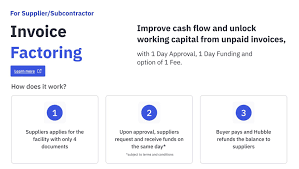
With traditional invoice financing or invoice discounting, your business generally continues to own the invoice and collect payment from the customer.
The customer pays according to the original invoice terms.
This is one of the major differences between invoice financing and invoice factoring. With financing, the business typically remains responsible for collecting payment. With factoring, the factoring company generally takes responsibility for collections.
Step 5: You Repay the Financing Provider
After your customer pays the invoice, you repay the provider for:
- The original cash advance.
- Interest or financing fees.
- Any other applicable charges under the agreement.
Once the balance is settled, your business keeps the remaining value of the invoice after financing costs.
Invoice Financing Example
Let’s look at a simple example.
Suppose your company sends a customer a $50,000 invoice with 30-day payment terms.
You need money immediately to purchase inventory, so you decide to use invoice financing.
The provider agrees to advance 80% of the invoice value.
Your advance
$50,000 × 80% = $40,000
You receive $40,000 upfront.
Assume the provider charges a 3% monthly fee, and your customer pays after one month.
The financing cost would be:
$50,000 × 3% = $1,500
When the customer pays the full $50,000 invoice, you settle the $40,000 advance plus the $1,500 financing cost.
Your remaining proceeds would be:
$50,000 − $40,000 − $1,500 + $40,000 = $48,500
In other words, you received the full value of your invoice minus the financing cost of $1,500.
This example is simplified. Actual pricing can vary significantly depending on the provider, customer payment speed, contract structure, and additional fees. A similar example and fee structure is described by NerdWallet.
How Much Does Invoice Financing Cost?
Invoice financing costs vary.
Some providers charge:
- Weekly fees
- Monthly fees
- Interest
- Platform fees
- Origination fees
- Service fees
- Late-payment fees
- Additional administrative charges
Reported fee structures can range widely. For example, NerdWallet describes weekly fees commonly ranging from approximately 0.5% to 2% and monthly fees that may range from around 1% to 5%, depending on the arrangement.
The most important factor is often how long your customer takes to pay.
A fee that initially appears small can become expensive if an invoice remains unpaid for several weeks or months.
Before signing an agreement, ask the provider:
- Is the fee charged weekly or monthly?
- Is pricing based on the full invoice or the advanced amount?
- Are there minimum fees?
- Are there origination or service fees?
- What happens if my customer pays late?
- Is there a termination fee?
- Are there monthly minimum volume requirements?
Always compare the total dollar cost and, where applicable, the effective annualized cost—not just the advertised rate.
Types of Invoice Financing
Invoice financing is a broad term. Several different financing structures exist.
1. Invoice Discounting
Invoice discounting allows a business to borrow against its outstanding invoices while generally retaining control of the customer relationship and collection process.
In many arrangements, customers may not know that a financing provider is involved.
The business receives an advance, collects payment from the customer, and repays the lender.
This can be attractive to companies that want to maintain direct control over customer communications.
2. Invoice Factoring
Invoice factoring is different from traditional invoice financing.
With factoring, the business generally sells its unpaid invoices to a factoring company at a discount.
The process usually works like this:
- You sell or assign the invoice to the factor.
- The factor advances part of the invoice value.
- The factor collects payment from your customer.
- You receive the remaining balance after fees are deducted.
The factoring company may advance up to around 90% of the invoice value, depending on the agreement and customer quality.
3. Selective or Spot Financing
Selective financing allows a business to choose specific invoices to finance.
For example, you might finance a single $100,000 invoice while leaving your other receivables untouched.
This can provide flexibility because you do not necessarily need to finance every invoice.
4. Whole-Ledger Financing
With whole-ledger financing, a business may agree to finance most or all eligible invoices over a specified period.
This may provide ongoing working capital but can involve additional commitments, volume requirements, or contractual obligations.
5. Accounts Receivable Line of Credit
An accounts receivable, or A/R, line of credit is secured by eligible outstanding receivables.
Instead of financing one invoice at a time, the business may draw funds from a revolving credit facility based on the value of its receivables.
This can be useful for companies with recurring cash-flow needs.
Invoice Financing vs. Invoice Factoring
Although the terms are often confused, they are not identical.
| Feature | Invoice Financing | Invoice Factoring |
|---|---|---|
| Basic structure | Borrow against invoices | Sell invoices at a discount |
| Invoice ownership | Business generally retains ownership | Factor purchases or acquires rights to the receivable |
| Customer collection | Usually handled by the business | Usually handled by the factoring company |
| Customer involvement | May be confidential | Customer may know the factor is involved |
| Main purpose | Access working capital | Access immediate cash and outsource collections |
The most important distinction is control.
With invoice financing, you generally continue managing the customer relationship and collecting payment. With factoring, the financing company generally takes over collection responsibilities.
Who Qualifies for Invoice Financing?
Requirements vary, but providers often look for businesses that have:
- Outstanding B2B invoices
- Completed work or delivered goods
- Creditworthy customers
- Valid and undisputed invoices
- A clear payment history
- Receivables that are not already pledged to another lender
Some providers may also evaluate:
- Business age
- Monthly or annual revenue
- Industry
- Customer concentration
- Average invoice size
- Payment terms
- Previous financing history
The customer’s financial strength can be particularly important because the invoice represents the expected source of repayment.
Advantages of Invoice Financing
Faster Access to Working Capital
The biggest advantage is speed.
Instead of waiting weeks or months for payment, a business may access cash shortly after an eligible invoice is approved.
Helps Manage Cash Flow Gaps
Businesses often have expenses that cannot wait for customer payments.
Invoice financing can help bridge the gap between:
Completing a sale → Receiving customer payment
May Be Easier to Qualify For
Since providers may place substantial importance on customer creditworthiness, some businesses may qualify even when they have difficulty obtaining traditional financing.
No Need to Give Up Equity
Unlike raising investment capital, invoice financing generally does not require the business owner to sell ownership in the company.
Flexible Funding Options
Some providers allow selective financing, meaning a business can finance only the invoices it chooses.
Disadvantages of Invoice Financing
It Can Be Expensive
Convenient financing can carry significant costs.
Fees can accumulate when customers take longer to pay, and the effective annual cost may be much higher than the advertised percentage suggests.
Customer Payment Delays Create Risk
Your financing cost may increase if a customer pays late.
A business can also face problems if a customer disputes or fails to pay an invoice.
Not Ideal for Every Business
Invoice financing generally works best for companies that issue invoices to other businesses or qualifying organizations.
Businesses that receive immediate payment from consumers may have few or no receivables to finance.
You May Still Be Responsible for Collections
With invoice financing, your business generally remains responsible for collecting from the customer.
If collections are a major challenge, factoring may be worth comparing.
When Does Invoice Financing Make Sense?
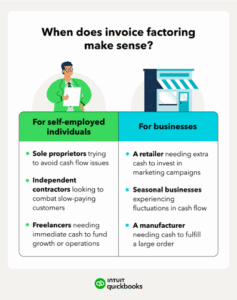
Invoice financing may be worth considering when:
- Your customers take a long time to pay.
- You have reliable B2B clients.
- You need short-term working capital.
- A large amount of cash is tied up in receivables.
- You need money to fulfill new orders.
- The benefit of receiving cash now outweighs the financing cost.
For example, if receiving $80,000 today allows your company to complete a profitable order that would otherwise be impossible to fund, invoice financing could potentially support growth.
However, if your customers already pay quickly or the financing fees significantly reduce your profit margin, another funding option may be more suitable.
How to Choose an Invoice Financing Company
Before choosing a provider, compare several important factors.
Compare the Advance Rate
A higher advance rate means more immediate cash, but it does not automatically mean a better deal.
Compare the total cost.
Understand Every Fee
Ask for a complete explanation of:
- Financing fees
- Interest
- Origination fees
- Service charges
- Late fees
- Minimum monthly fees
- Termination fees
Review the Contract Carefully
Pay attention to:
- Contract length
- Minimum funding requirements
- Personal guarantees
- Recourse provisions
- Customer notification requirements
- Penalties
Check Whether the Agreement Is Recourse or Non-Recourse
In a recourse arrangement, the business may remain responsible if the customer does not pay.
In a non-recourse arrangement, the financing provider may assume some nonpayment risk, although the exact protection depends on the contract and non-recourse arrangements can cost more.
Alternatives to Invoice Financing
Invoice financing is not the only way to improve cash flow.
Other options may include:
- Business lines of credit
- Traditional business loans
- SBA loans for eligible U.S. businesses
- Business credit cards
- Equipment financing
- Merchant cash advances
- Equity financing
- Improving invoice collection procedures
Each option has different costs, qualification requirements, repayment structures, and risks.
A line of credit may be more cost-effective for a business with strong credit. On the other hand, invoice financing may be more accessible for a growing company with reliable customers but limited assets.
Frequently Asked Questions
How quickly can you get invoice financing?
Funding speed depends on the provider and the verification process. Some providers can make funds available within one or a few business days after approval, while first-time applications may take longer.
Do you need good credit for invoice financing?
Your own credit may still be reviewed, but the creditworthiness of your customers can be a major factor because the unpaid invoice supports the financing arrangement.
Do customers know about invoice financing?
Not always. Confidential invoice discounting may allow the business to continue handling customer payments without the customer being directly involved with the lender. Factoring, however, often involves the factor collecting directly from the customer.
Is invoice financing a loan?
Invoice financing can be structured as a loan or line of credit secured by outstanding receivables. Invoice factoring is different because it generally involves selling invoices to a third party.
What happens if the customer does not pay?
The answer depends on the contract. In many recourse arrangements, the business remains responsible for the unpaid amount. Non-recourse agreements may transfer certain risks to the provider, but coverage and exclusions vary.
Final Thoughts
So, how does invoice financing work?
A business uses unpaid customer invoices to access cash before the customer actually pays. The financing provider reviews eligible invoices and advances a percentage of their value. When the customer pays, the business settles the advance along with the agreed fees.
The process can provide a valuable solution for companies experiencing temporary cash-flow gaps, especially B2B businesses with reliable customers and long payment terms.
However, convenience comes at a cost. Before signing an agreement, carefully compare advance rates, fees, repayment structures, customer-payment risk, and contract terms.
The best invoice financing arrangement is not necessarily the provider offering the highest advance. It is the one that provides enough working capital at a total cost your business can realistically afford.