Amazon One Medical Health AI: How Amazon’s AI-Powered Healthcare Assistant Works
Artificial intelligence is rapidly changing the way people interact with healthcare services. Instead of searching through multiple websites, waiting for office hours, or struggling to understand medical records, patients are beginning to use AI-powered tools to get guidance and connect with care more efficiently.
One of the most notable developments in this area is Amazon One Medical Health AI.
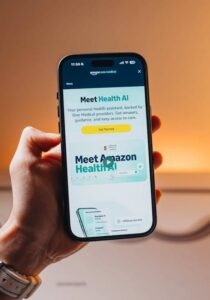
Amazon’s Health AI is a personalized health agent backed by One Medical providers. It is designed to answer health-related questions, help users understand medical records and lab results, assist with appointments and prescription management, and connect people with professional healthcare services when appropriate.
This guide explains what Amazon One Medical Health AI is, how it works, its main features, benefits, privacy considerations, limitations, and what it could mean for the future of AI-powered healthcare.
What Is Amazon One Medical Health AI?
Amazon One Medical Health AI is an AI-powered health assistant connected to Amazon’s healthcare ecosystem. It combines personalized AI guidance with access to services provided through Amazon One Medical and Amazon Pharmacy.
According to Amazon, Health AI can provide answers and insights about symptoms, medications, lab results, and other health questions. With permission, it can use relevant health information to personalize responses and help users take actions such as finding appointments or managing prescriptions.
The technology is different from a standard chatbot because it is designed to move beyond simply answering questions.
Health AI can help a user progress from:
Question → Personalized guidance → Appropriate care → Appointment or treatment support
For example, someone may have a question about a symptom or lab result. Health AI can provide information, explain available health data, and help connect that person with a One Medical provider when professional medical care is needed.
Amazon describes the system as a personal health assistant that combines AI technology with human healthcare support.
How Does Amazon One Medical Health AI Work?
The basic goal of Health AI is to make healthcare information and services easier to access.
The process generally involves several stages.
1. Ask a Health Question
A user can ask questions about topics such as:
- Symptoms
- Medications
- Lab results
- Medical records
- General health concerns
- Healthy habits
- Prescription needs
Health AI then generates guidance based on the question and, where authorized, relevant health information.
2. Health Information Can Provide Context
Personalization is one of the most important features of the platform.
Amazon says Health AI reviews information such as a user’s conditions, medications, and allergies before providing responses. With permission, One Medical can also access available medical records from other healthcare providers, including hospitals, specialists, and previous primary care providers.
This context can potentially make responses more relevant than a general web search.
For example, a general search engine may provide the same information to every person. A personalized health system can take relevant medical context into account before generating guidance.
However, users should understand what information they authorize the service to access and review the applicable privacy terms.
3. Health AI Helps Users Take Action
One of the main features that separates Amazon Health AI from a traditional information chatbot is its ability to help users take the next step.
According to Amazon, Health AI can assist with:
- Finding care
- Booking appointments
- Connecting with One Medical providers
- Managing prescription renewals
- Understanding medical records
- Explaining lab results
- Supporting health and lifestyle goals
Amazon also connects the experience with Amazon Pharmacy for medication fulfillment where appropriate.
The idea is to reduce the number of separate steps required to move from a health question to actual care.
Key Features of Amazon One Medical Health AI
Personalized Health Guidance
Health questions are rarely identical for every person.
The same symptom may have different significance depending on age, medications, allergies, medical history, and other factors.
Amazon says Health AI personalizes responses using relevant information from a user’s medical context, including conditions, medications, and allergies.
This does not mean AI replaces a doctor’s diagnosis. Instead, it can help provide context and guide users toward appropriate next steps.
Understanding Lab Results
Medical lab reports can be difficult to understand.
Numbers, abbreviations, reference ranges, and technical terminology can leave patients uncertain about what their results mean.
Amazon One Medical has also introduced Health Insights, a beta feature designed to help eligible members better understand routine lab results. Amazon says the feature analyzes more than 50 biomarkers and organizes personalized insights around health domains such as cardiovascular, metabolic, and immune function.
This type of AI-assisted explanation may help patients prepare for more informed conversations with their healthcare providers.
However, AI-generated explanations should not be treated as a substitute for professional medical interpretation.
Appointment Booking and Care Navigation
Healthcare often involves administrative tasks that can be frustrating and time-consuming.
Health AI is designed to help users navigate care by identifying appropriate options and assisting with appointment booking. Amazon says the assistant can connect people with One Medical providers through available message or video options.
Amazon One Medical also offers in-person primary care in locations where offices are available, along with virtual care services.
This creates a connected system where AI can help guide a user toward digital or human care instead of simply providing a text response.
Medication and Prescription Support
Prescription management can involve several steps, including renewals, provider communication, and pharmacy coordination.
Health AI can assist with prescription-related tasks, while Amazon Pharmacy provides medication services within Amazon’s broader healthcare ecosystem.
A healthcare provider still determines what treatment or medication is medically appropriate.
For example, Amazon One Medical’s On-Demand Care process allows a patient to provide information about a condition and connect with a provider. The provider determines the appropriate treatment and may send a prescription to the patient’s selected pharmacy when medically appropriate.
Connection to One Medical Providers
A major advantage of the Amazon approach is the combination of AI technology with access to licensed healthcare professionals.
Health AI is backed by One Medical providers and includes pathways for connecting users with professional care. Amazon says clinical safeguards are used to help direct people to providers when medical expertise is necessary.
This human connection is particularly important because AI systems cannot perform physical examinations, independently verify every medical condition, or replace clinical judgment.
Benefits of Amazon One Medical Health AI
1. Faster Access to Health Information
Health questions do not always arise during normal clinic hours.
An AI-powered health assistant can provide guidance around the clock and help users decide what action may be appropriate.
2. More Personalized Responses
With authorized access to relevant health information, Health AI can tailor responses using factors such as conditions, medications, and allergies.
This can make the experience more useful than receiving a completely generic answer.
3. Easier Healthcare Navigation
Healthcare can involve appointments, prescriptions, insurance, providers, medical records, and multiple communication channels.
A connected AI assistant may simplify some of these steps by helping users find care and take action from one interface.
4. Better Understanding of Medical Information
AI tools may make complex health information easier to understand.
Amazon’s Health Insights beta feature demonstrates this approach by translating routine bloodwork into personalized insights across multiple health domains.
5. Integration With Amazon Healthcare Services
Amazon combines several healthcare services under a broader ecosystem that includes:
- Amazon One Medical
- Health AI
- Amazon Pharmacy
The goal is to connect healthcare guidance, professional care, and medication services more closely.
Amazon One Medical Membership vs. On-Demand Care
Amazon One Medical provides more than one way to access healthcare services.
One Medical Membership
Membership is designed for people seeking ongoing primary care support.
According to Amazon, members can use the One Medical app to access services such as appointment scheduling, in-office care where available, and 24/7 on-demand virtual care. Scheduled visits may be billed to the user or their insurance depending on the service and coverage.
Amazon One Medical On-Demand Care
On-Demand Care is designed for one-time treatment of certain common conditions.
Amazon currently lists more than 30 common conditions for this service. Users can answer questions about their condition and connect with a provider through direct messaging or video, depending on the available option.
Health AI can act as an additional layer by helping users understand their situation and connect with appropriate services.
Is Amazon One Medical Health AI Available to Everyone?
Availability can depend on location, age, account eligibility, and Amazon’s current service rollout.
Amazon’s current Health AI information says the service is available to Amazon customers in the United States who are 18 years of age or older. Service features and eligibility can change, so users should check Amazon’s latest requirements before relying on a specific feature.
Health AI is part of a U.S.-focused healthcare offering, and One Medical services also vary according to location and service availability.
Privacy and Health Information
Privacy is one of the most important issues surrounding AI healthcare systems.
Health information can include highly sensitive data, including medical history, prescriptions, laboratory results, and other protected information.
Amazon’s Health AI terms state that Amazon collaborates with Amazon Pharmacy and One Medical and direct users to applicable privacy notices explaining how protected health information is collected, used, shared, and protected.

Before connecting outside medical records or authorizing data access, users should review:
- Privacy notices
- Terms of use
- Medical service terms
- Data-sharing permissions
- Account settings
Users should also understand which Amazon service is handling a particular healthcare interaction.
Can Amazon Health AI Replace a Doctor?
No.
AI can answer questions, summarize information, explain records, and assist with healthcare navigation. However, AI does not replace the role of licensed healthcare professionals.
Doctors and other qualified providers perform functions that AI cannot independently replicate, including:
- Physical examinations
- Clinical diagnosis
- Treatment decisions
- Medical testing
- Emergency assessment
- Professional judgment
Amazon’s Health AI is designed with connections to One Medical providers and clinical safeguards intended to involve human healthcare professionals when medical expertise is required.
For severe, sudden, or potentially life-threatening symptoms, people should seek urgent or emergency medical care rather than relying only on an AI assistant.
Advantages and Limitations
Potential Advantages
- Personalized health guidance
- Easier access to health information
- Assistance with understanding records
- Appointment support
- Prescription management assistance
- Connection to healthcare professionals
- Integration with One Medical and Amazon Pharmacy
Important Limitations
- AI responses can contain errors or misunderstand context.
- AI does not replace professional diagnosis.
- Service availability may vary by location and eligibility.
- Access to personal health information requires careful privacy consideration.
- Some healthcare services may involve additional costs or insurance billing.
The most effective use of healthcare AI is likely as a support tool rather than a replacement for qualified medical professionals.
Frequently Asked Questions
What is Amazon One Medical Health AI?
Amazon Health AI is a personalized AI health agent connected to Amazon’s healthcare ecosystem and backed by One Medical providers. It can answer questions, provide personalized insights, explain health information, and help users connect with appropriate care.
Can Health AI explain lab results?
Yes. Amazon says Health AI can provide insights about lab results, and Amazon One Medical’s Health Insights beta feature is specifically designed to help eligible members understand routine bloodwork and more than 50 biomarkers.
Can Amazon Health AI book appointments?
Amazon says Health AI can help users find and book appointments and connect them with One Medical providers when appropriate.
Does Amazon Health AI replace doctors?
No. The technology is designed to provide guidance and help users access care. Licensed healthcare professionals remain responsible for clinical assessment, diagnosis, and treatment decisions.
Is Amazon One Medical Health AI free?
Costs and benefits depend on the service being used and the user’s eligibility. Amazon currently offers different One Medical membership and On-Demand Care options, while Health AI also has specific eligibility and promotional terms. Users should review the current Amazon terms because prices and benefits can change.
Final Thoughts
Amazon One Medical Health AI represents a significant step toward a more connected model of digital healthcare.
Instead of using AI only as a source of general answers, Amazon is combining personalized guidance with practical actions. Users can ask questions, better understand health information, explore care options, manage certain healthcare tasks, and connect with One Medical providers.
The potential benefit is convenience. AI may reduce the time spent searching for information, interpreting records, navigating healthcare services, and managing routine tasks.
At the same time, responsible use remains essential. AI-generated guidance should support—not replace—professional medical care. For diagnosis, treatment decisions, emergencies, or serious health concerns, qualified healthcare professionals remain indispensable.
As AI technology continues to evolve, services such as Amazon Health AI may become an increasingly important part of how people understand, manage, and access healthcare.