How Does Company Health Insurance Work? A Complete Guide for Employees and Employers
How does company health insurance work? Company health insurance, also called employer-sponsored health insurance, is coverage offered through an employer as part of its employee benefits package. Instead of purchasing an individual policy directly, eligible employees can generally enroll in a group health plan selected or sponsored by their employer.
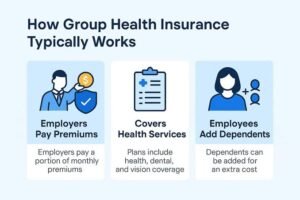
The employer usually pays part of the insurance premium, while the employee contributes through payroll deductions. When the employee receives covered medical care, the insurance plan then pays part of the eligible cost according to the plan’s rules.
Understanding how company health insurance works can help employees compare benefits, estimate healthcare costs, and make better decisions during open enrollment. It is also important for business owners who are deciding whether offering health benefits makes financial sense.
According to KFF’s 2025 Employer Health Benefits Survey, employer-sponsored insurance covered about 154 million people under age 65 in the United States. Average annual premiums in 2025 were $9,325 for single coverage and $26,993 for family coverage, although actual costs vary significantly by employer and plan.
What Is Company Health Insurance?
Company health insurance is a type of group health coverage provided through an employer.
Rather than every employee purchasing a separate policy, the employer typically works with an insurance company, broker, or benefits administrator to make one or more health plans available to eligible workers.
An employee may then choose whether to enroll and, depending on the employer, may have several plan options.
Company health insurance can help employees access:
- Doctor visits
- Hospital services
- Prescription medications
- Preventive care
- Emergency services
- Specialist care
- Mental health services
- Laboratory and diagnostic services
- Other covered healthcare services
The exact benefits depend on the plan. Employees should always review their Summary of Benefits and Coverage and other plan documents before assuming that a particular service is covered.
How Does Company Health Insurance Work Step by Step?
The basic process is relatively straightforward.
1. The Employer Selects a Health Plan
The employer decides whether to offer health insurance and evaluates available plans.
Businesses may work directly with an insurance company or use a licensed insurance broker or benefits consultant.
Employers can sometimes offer employees one plan or several options, depending on the company’s benefits strategy.
2. Employees Become Eligible
Not every worker necessarily becomes eligible immediately.
Eligibility can depend on factors such as:
- Full-time or part-time status
- Employment classification
- Waiting periods
- Company policies
- Applicable federal and state requirements
For example, many employers do not offer their health benefits to part-time or temporary workers. KFF’s 2025 survey found substantial differences in eligibility and coverage between different types of workers.
3. The Employee Enrolls
Eligible employees normally receive an opportunity to enroll during an initial enrollment period, annual open enrollment, or after a qualifying life event.
The employee may choose:
- Employee-only coverage
- Employee plus spouse
- Employee plus children
- Family coverage
The available choices depend on the employer’s plan.
4. Premiums Are Paid
Health insurance requires a premium—the amount charged for maintaining coverage.
With company health insurance, the employer commonly pays part of the premium and the employee pays the remaining portion.
The employee’s share is often deducted automatically from each paycheck.
The exact employer contribution varies. For small-business SHOP coverage, for example, employers can decide how much of employees’ premiums they will pay.
5. The Employee Uses the Insurance
After coverage begins, employees can use their insurance for eligible medical services.
Depending on the plan, they may need to use doctors, hospitals, pharmacies, or other providers within a specific network to receive the best coverage.
The employee may pay a deductible, copayment, or coinsurance before the insurance company pays its portion.
What Does the Employee Actually Pay?
One of the biggest misunderstandings about company health insurance is that paying the monthly premium does not necessarily mean all medical care is free.
Employees can have several different healthcare costs.
Premium
The premium is the amount paid to maintain insurance coverage.
If your employer pays part of the premium, your payroll deduction represents your portion.
Deductible
A deductible is the amount you generally pay for certain covered services before the insurance plan begins paying according to its cost-sharing rules.
For example, if a plan has a $2,000 deductible, you may have to pay eligible costs toward that deductible before the plan starts paying for many covered services.
However, some services may be covered before the deductible depending on the plan.
Copayment
A copayment, or copay, is usually a fixed amount for a covered service.
For example, a plan might require a fixed copay for a primary-care visit.
The actual amount depends on the plan.
Coinsurance
Coinsurance is a percentage of the cost of a covered service that the employee pays after applicable deductible requirements have been satisfied.
For example, if your plan requires 20% coinsurance for a covered service, you may pay 20% while the insurance plan pays the remaining 80%, subject to the plan’s rules.
Out-of-Pocket Maximum
The out-of-pocket maximum limits how much you pay for covered services during a plan year, subject to the plan’s rules.
Premiums generally don’t count toward the out-of-pocket maximum.
This figure is particularly important when comparing employer health plans because a plan with a lower monthly premium may have higher potential out-of-pocket costs.
Who Pays for Company Health Insurance?
Both the employer and employee may contribute.
Consider a simplified example.
Suppose a health plan costs $900 per month for employee coverage.
If the employer contributes $650, the employee may be responsible for $250 per month.
The $250 could then be deducted from the employee’s paycheck according to the employer’s payroll schedule.
This is only an example. Actual premiums and contribution percentages vary widely.
KFF reported that total employer-sponsored premiums in 2025 averaged $9,325 annually for single coverage and $26,993 for family coverage.
Does the Employer Have to Offer Health Insurance?
It depends on the size and circumstances of the business.
Under the Affordable Care Act’s employer shared responsibility provisions, applicable large employers—generally employers with at least 50 full-time employees and full-time equivalents—may have responsibilities related to offering qualifying health coverage.
Smaller employers generally aren’t required by federal law to offer health insurance simply because they have employees, although state requirements and other rules can differ.
HealthCare.gov explains that employers with fewer than 50 full-time employees and full-time equivalents generally aren’t required to offer health insurance and don’t face the federal employer shared responsibility payment for not doing so.
Because employment and insurance regulations can change, businesses should verify requirements applicable to their specific situation.
What Is Group Health Insurance?
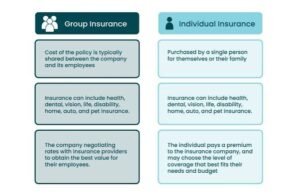
Company health insurance is usually a form of group health insurance.
A group plan covers a group of people under a common employer-sponsored arrangement.
This differs from individual health insurance, where a person purchases coverage for themselves or their family.
KFF describes employer-sponsored insurance as coverage offered through a sponsoring group such as an employer.
Group coverage can be attractive to employees because employers often contribute toward premiums, potentially making coverage less expensive than purchasing a comparable policy independently.
What Types of Company Health Plans Are Available?
Employers may offer different types of health plans.
HMO
Health Maintenance Organization plans typically emphasize a defined provider network and may require a primary-care provider to coordinate certain care.
PPO
Preferred Provider Organization plans generally provide broader provider flexibility, although using in-network providers usually results in lower costs.
EPO
Exclusive Provider Organization plans generally require employees to use providers within the plan’s network except in specific situations such as emergencies.
HDHP
A high-deductible health plan generally has a higher deductible and can be paired with a Health Savings Account when the plan and employee meet applicable requirements.
The best plan isn’t necessarily the one with the lowest premium. Employees should compare the premium, deductible, network, copays, coinsurance, prescription coverage, and out-of-pocket maximum together.
What Happens If You Leave Your Job?
Company health insurance is connected to employment, so coverage may end when you leave your employer, depending on the plan’s termination rules.
However, losing job-based coverage may create other options.
One potential option is COBRA continuation coverage for eligible individuals. COBRA can allow qualified people to continue certain employer-sponsored group health coverage temporarily, although they may have to pay the full premium plus an administrative fee.
Another possibility may be enrolling in an individual Marketplace plan after losing employer coverage.
Your specific options and deadlines depend on your circumstances, so check with your employer’s benefits department and the applicable government resources promptly after losing coverage.
Can You Keep Company Health Insurance When Changing Jobs?
Usually, you cannot simply transfer your old employer’s group health plan to your new employer.
Your new employer may have its own health insurance options, and you can generally enroll according to that employer’s eligibility and enrollment rules.
If there is a gap between jobs, you may have options such as COBRA continuation coverage or Marketplace coverage, depending on your circumstances.
Planning ahead is important if you take medications, have upcoming medical appointments, or require ongoing treatment.
Company Health Insurance for Small Businesses
Small businesses have several approaches to providing employee health benefits.
One option is the Small Business Health Options Program (SHOP). HealthCare.gov states that SHOP is generally available to businesses and nonprofit organizations with 1–50 employees, although eligibility requirements apply.
Small businesses may also consider other arrangements, including certain Health Reimbursement Arrangements (HRAs), depending on their circumstances.
For eligible small employers, SHOP coverage can potentially provide access to the Small Business Health Care Tax Credit. HealthCare.gov says SHOP is generally the route used to qualify for that credit, subject to eligibility requirements.
For employers, the decision should consider not only premiums but also employee participation, administration, tax implications, recruiting goals, and the needs of the workforce.
How Should Employees Compare Company Health Plans?
If your employer offers multiple health insurance options, don’t choose based solely on the monthly premium.
Compare these factors:
1. Monthly premium: How much will come out of each paycheck?
2. Deductible: How much could you pay before the plan starts paying for applicable services?
3. Out-of-pocket maximum: What is your maximum potential spending for covered services under the plan’s rules?
4. Provider network: Are your preferred doctors and hospitals included?
5. Prescription coverage: Are your medications covered, and what are the applicable costs?
6. Copays and coinsurance: What will common medical services cost?
7. Employer contribution: How much does your company contribute?
8. HSA eligibility: If you’re considering a high-deductible plan, determine whether it qualifies for an HSA.
Looking at the complete cost structure gives you a much better picture than comparing premiums alone.
How Much Does Company Health Insurance Cost?
There is no single price for company health insurance.
Costs depend on factors including:
- Location
- Employee demographics
- Number of employees
- Coverage level
- Provider network
- Plan design
- Deductible
- Healthcare utilization
- Employer contribution
- Insurance market conditions
For context, KFF’s 2025 survey found average annual employer-sponsored premiums of $9,325 for single coverage and $26,993 for family coverage. Workers contributed an average of $1,440 for single coverage and $6,850 for family coverage.
These are national averages, not a quote for a particular employee or company.
Frequently Asked Questions
Is company health insurance free?
Usually not. Employers often pay part of the premium, while employees contribute through payroll deductions. Employees may also have deductibles, copays, coinsurance, and other costs when receiving healthcare.
Is company health insurance better than individual insurance?
Not automatically. Employer coverage can be financially attractive because the employer may contribute toward premiums, but the best option depends on the plan’s benefits, costs, provider network, and the employee’s individual circumstances.
Can I decline my company’s health insurance?
In many situations, employees can decline employer coverage, although enrollment and waiver procedures depend on the employer’s plan. Declining employer coverage can also affect eligibility for Marketplace financial assistance in certain circumstances. HealthCare.gov notes that employees who have an employer offer may not qualify for income-based Marketplace savings unless the job-based coverage isn’t considered affordable under applicable rules.
Does company health insurance cover my family?
It can. Employers may allow employees to add spouses and children, but the available dependent coverage and employee contribution vary by plan.
Can a small business offer health insurance?
Yes. Small businesses can choose to offer coverage through options such as SHOP or other arrangements, subject to applicable eligibility requirements. HealthCare.gov says SHOP generally serves businesses with 1–50 employees.
Final Thoughts
So, how does company health insurance work? In simple terms, an employer makes a group health plan available to eligible employees, the employer and employee may share the premium cost, and the insurance plan helps pay for covered healthcare expenses according to its rules.
The employee’s real cost is more than the payroll deduction. Premiums, deductibles, copays, coinsurance, provider networks, prescription costs, and the out-of-pocket maximum all matter.
If you’re comparing employer health plans, calculate the likely total yearly cost rather than focusing only on the cheapest monthly premium. If you’re a business owner, compare plan costs with employee needs, tax considerations, recruitment benefits, and available small-business programs.
Health insurance rules and plan terms can change, so always review your current plan documents and official government guidance before making an enrollment or coverage decision.
Disclaimer: This article provides general educational information about employer-sponsored health insurance in the United States. It is not insurance, legal, tax, medical, or financial advice. Coverage, eligibility, costs, and regulations vary by plan, employer, insurer, and state.